Situations by age · Ages 4-9
Losing a game: what helps
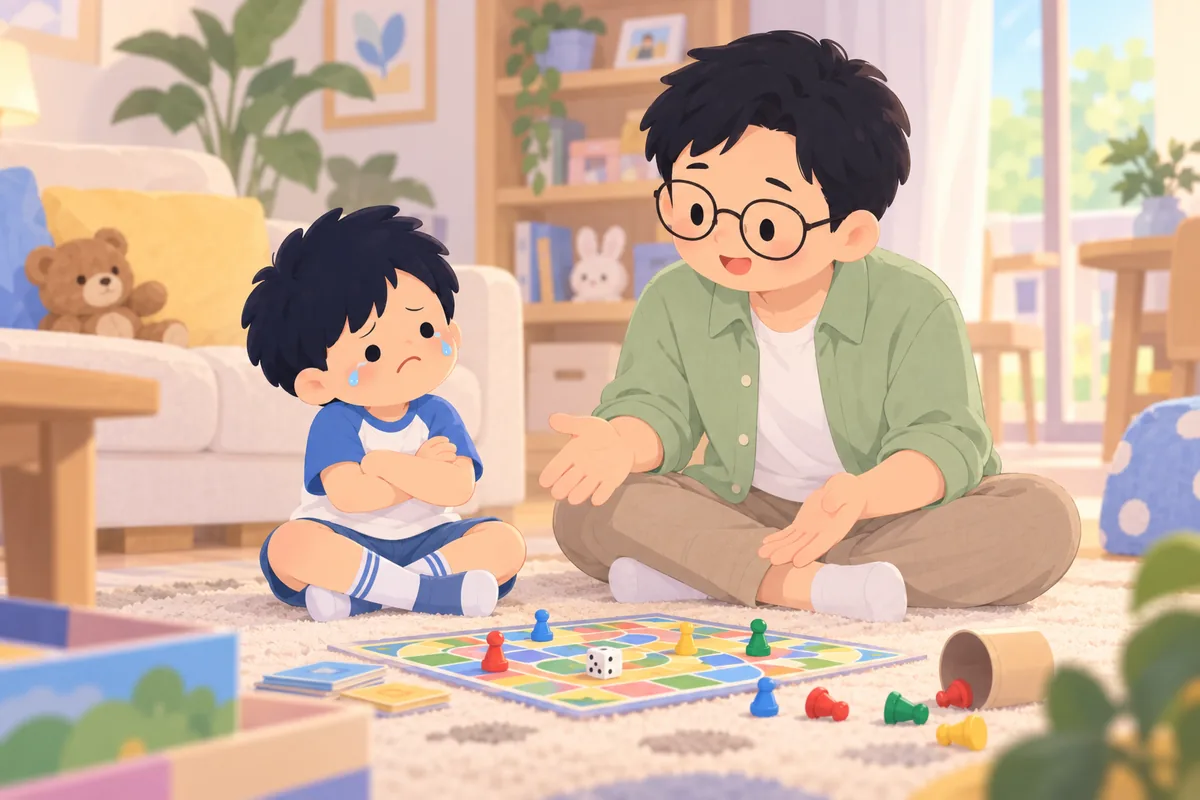
The moment
Sunday evening. Mum or Dad and your child are playing snakes and ladders on the living-room floor. Your child has been laughing the whole game, until Mum or Dad's piece reaches the end first. Your child swipes the board, sending pieces flying, shouts “I'm not playing! You cheated!” and bursts into loud tears. Mum or Dad is still stunned at how fast the fun turned.
What your child may be feeling
Your child may feel more disappointment than they can hold right then, and may feel that losing means they're not good enough.
What to do in the moment
- Stay close and calm. Don't rush to tidy up or teach anything yet.
- Name the feeling: “You're really disappointed because you wanted to win.”
- Once calm, say, “It's OK to be upset, but not to knock things over. Let's pick them up together.” Tidy up together and say you can play again another time.
Try saying this
“Losing feels really bad, doesn't it. Mum or Dad gets it. Let's take a break, then maybe play another round?”
Instead of “It's just a game. Why are you crying?”
Why it helps
Waiting for a turn, following rules and coping with disappointment are skills children build slowly through play. Games with rules are good practice for managing feelings, especially with a calm adult nearby.
Source: Harvard Center on the Developing Child
Every child handles it differently
In the app: the way that fits your child's energy (some answer at once to a yes-or-no question, some need time first), a 3-day plan to try, and a word for you.
Ideas to try and adapt, not a diagnosis. Every child is different.
Have a question about this?
Ask other parents and the Family Blueprint team in our community. Read what other homes asked first, no sign-up needed.
Ask in the community