Situations by age · Ages 13-18
Bullied or shamed online: what helps

The moment
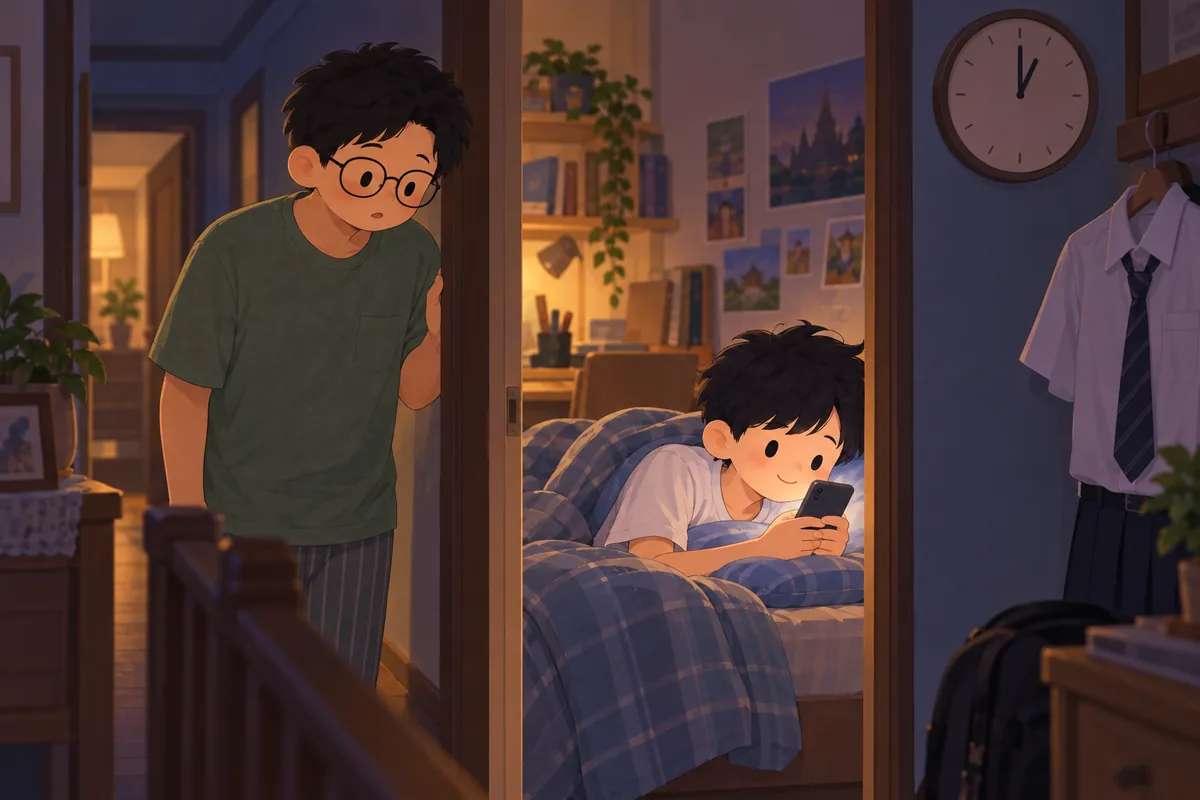
Your child stops posting on IG, flinches every time a notification pings, and doesn't want to go to school. One day Mum or Dad finds your child crying in their room and learns someone turned an unflattering photo of your child into a meme, shared in the year-group LINE chat and on TikTok, with hundreds of mocking comments. Mum or Dad's first urge is to take the phone and delete every app to make it stop.
What your child may be feeling
Online shaming follows your child into their bedroom, with no escape even at home, and it feels like the whole school has seen it. Your child may be too ashamed to tell, and afraid that if Mum or Dad finds out, the phone will be taken, cutting them off from all their friends.
What to do in the moment
- Save evidence before anything is deleted: screenshot posts, comments, account names, dates and times (if it's a sexual image of your child, don't screenshot or forward the image itself; save the link and account name instead). Don't reply or hit back. Then report and block the accounts together in the app.
- Report it to the homeroom teacher or student affairs in writing, with the evidence, and ask them to get posts removed from school groups and keep an eye out in class. If there are threats, leaked personal details or sexual images, call the police on 191 or report online at thaipoliceonline.go.th.
- Help your child carve out safe space: turn off comments, make the account private, or take a break from the problem app if your child chooses to. Encourage time with trusted friends, and check in every few days.
Try saying this
“Thank you for letting me know. This is not your fault. I won't take your phone. We'll deal with it together, step by step.”
Instead of “Well, who told you to post so many photos of yourself? Delete all the apps. Done.”
Why it helps
UNICEF explains that online bullying can feel like being attacked everywhere, even inside your own home, and can leave young people ashamed, losing interest in things they love, short of sleep, or with headaches and stomach aches. UNICEF Thailand's Online Safety Manual (2025) advises blocking, saving evidence, telling a trusted adult and reporting. Taking the phone away can feel like a second punishment and make teens less likely to tell next time. If your child doesn't want to go to school, can't sleep, withdraws, or talks about self-harm, talk to the school counsellor or a doctor, or call the 1323 hotline.
Source: UNICEF, Cyberbullying: What is it and how to stop it (2026); UNICEF Thailand, Online Safety Manual for Children and Young People (2025); Royal Thai Police, online reporting (thaipoliceonline.go.th) and 191; Department of Mental Health Thailand, 1323 hotline
Every child handles it differently
In the app: the way that fits your child's energy (some answer at once to a yes-or-no question, some need time first), a 3-day plan to try, and a word for you.
See a professional when
If your teen is threatened, has personal details leaked, or sexual or doctored images of them are being shared, call the police on 191 or report online, and tell the school. If they don't want to go to school, can't sleep, or seem sad or withdrawn for more than two weeks, talk to the school counsellor or a doctor. If they talk about dying or hurting themselves, don't leave them alone: call the 1323 mental health hotline (free, 24 hours). If there's immediate danger, call 1669.
Ideas to try and adapt, not a diagnosis. Every child is different.
Have a question about this?
Ask other parents and the Family Blueprint team in our community. Read what other homes asked first, no sign-up needed.
Ask in the community