Situations by age · Ages 13-18
Came home drunk, or drinking with friends: what helps

The moment
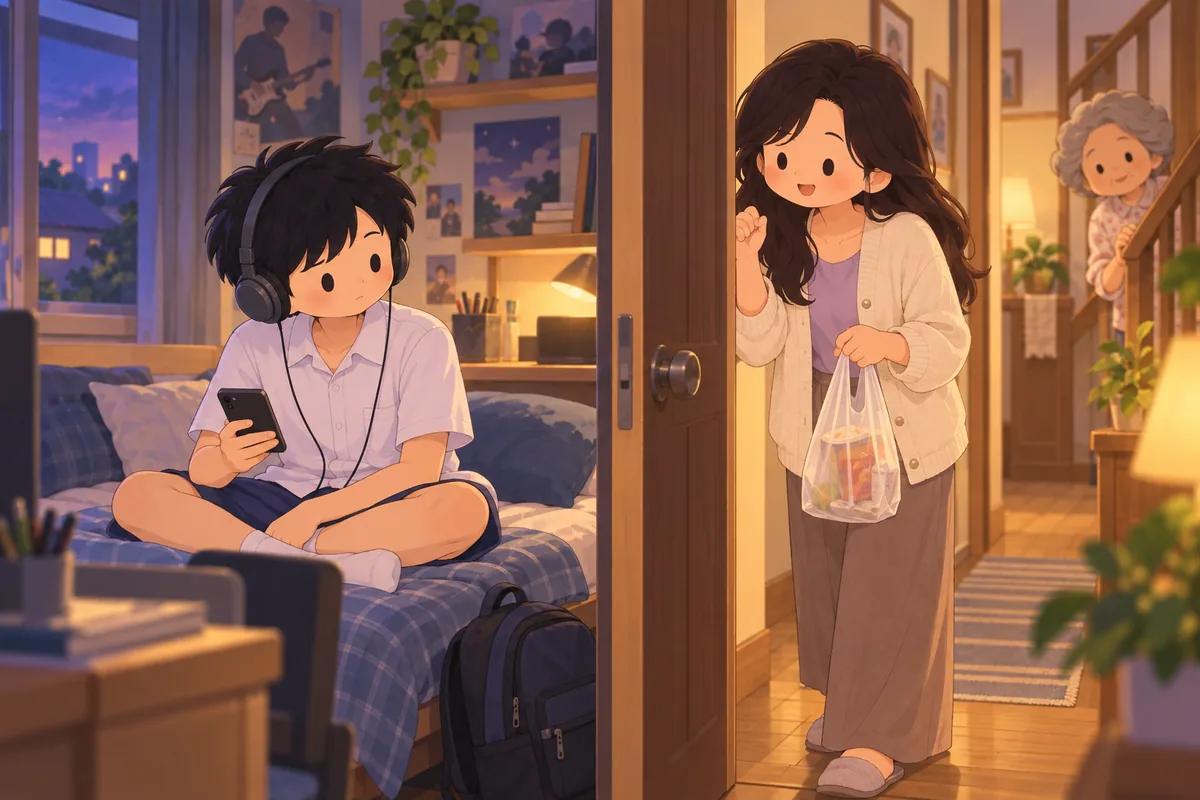
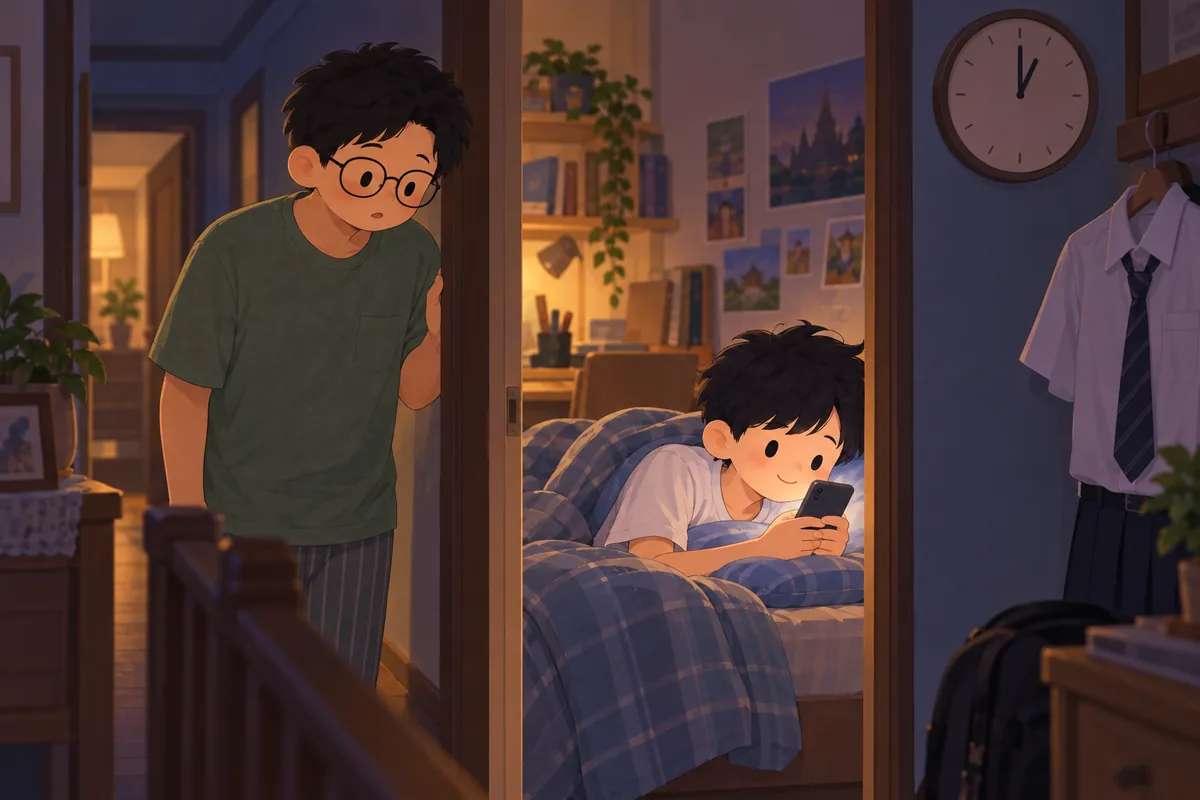
Saturday night, your child, fifteen, goes to a friend's birthday party, promising to be home by 10. They get back near midnight on the back of a friend's motorbike, smelling of alcohol, unsteady and slurring. Mum or Dad is furious and frightened, and wants to yell right there and then.
What your child may be feeling
Your child may have wanted to fit in, been curious, or found it hard to say no. Tonight they may feel woozy, embarrassed and scared of Mum or Dad's anger. A drunk brain can't handle a serious talk, so the conversation can wait until tomorrow.
What to do in the moment
- That night, safety first: water, sleeping on their side, and someone nearby to check. No cold showers or coffee to sober up. If your child can't be woken, breathes very slowly or with pauses, keeps vomiting, has a seizure, or has cold, pale skin, call 1669 right away.
- The next day, when you're both calm, ask what happened, who was there and how they got home, and listen to the end. Then work out your family's rule on alcohol together, with your child helping to shape it, and agree on fair consequences if it's broken.
- A starter agreement you can adapt: the law bans selling alcohol to anyone under 20, and our family uses 20 as our line too; never get in a car or on a motorbike with someone who has been drinking; call Mum or Dad any time for a pick-up, with no lecture that night and a calm talk the next day; let Mum or Dad know where you are and who you're with. Practise a way to say no without losing face, too, like “I'll pass, I've got practice tomorrow.”
Try saying this
“Tonight I'm just glad you're home. Drink some water and get to bed. We'll talk tomorrow.”
Instead of “Drunk at your age! What will the neighbours think? You're grounded for good.”
Why it helps
In Thailand's 2021 student health survey (GSHS), 28.2% of students aged 13–17 had drunk alcohol in the past month, and more than half of those who drank started before 14. The US National Institute on Alcohol Abuse and Alcoholism (NIAAA) explains that the brain keeps developing into the 20s and alcohol can disrupt that, that people who start drinking before 15 face a higher risk of alcohol problems later, and that parents play a key role in shaping their children's views on alcohol. Australia's Raising Children Network suggests making alcohol rules together with your teen, since teens are more likely to see rules they helped make as fair and stick to them, and suggests parents plan ahead with their teen for pick-ups and getting home. If your child drinks again and again, drinks alone, drinks to escape feelings, or uses other substances too, talk to a doctor, the 1413 quit-drinking line or the 1323 hotline.
Source: WHO/Thai Ministry of Public Health, GSHS Thailand 2021 Fact Sheet; NIAAA, Underage Drinking (2026) and Understanding the Dangers of Alcohol Overdose; Raising Children Network (Australia), Teenagers and alcohol: how to prevent underage drinking; Alcoholic Beverage Control Act B.E. 2551 (2008), s.29 as amended by the Alcoholic Beverage Control Act (No. 2) B.E. 2568 (2025)
Every child handles it differently
In the app: the way that fits your child's energy (some answer at once to a yes-or-no question, some need time first), a 3-day plan to try, and a word for you.
See a professional when
If your teen can't be woken, breathes very slowly or with pauses, keeps vomiting or chokes, has a seizure, or has cold, pale skin, call 1669 now and don't leave them alone. If they drink more often, drink alone, drink to forget their troubles, or use other substances too, talk to a doctor, the 1413 quit-drinking line or the 1323 mental health hotline.
Ideas to try and adapt, not a diagnosis. Every child is different.
Have a question about this?
Ask other parents and the Family Blueprint team in our community. Read what other homes asked first, no sign-up needed.
Ask in the community