Situations by age · Ages 6-12
Can't stop gaming: what helps
The moment
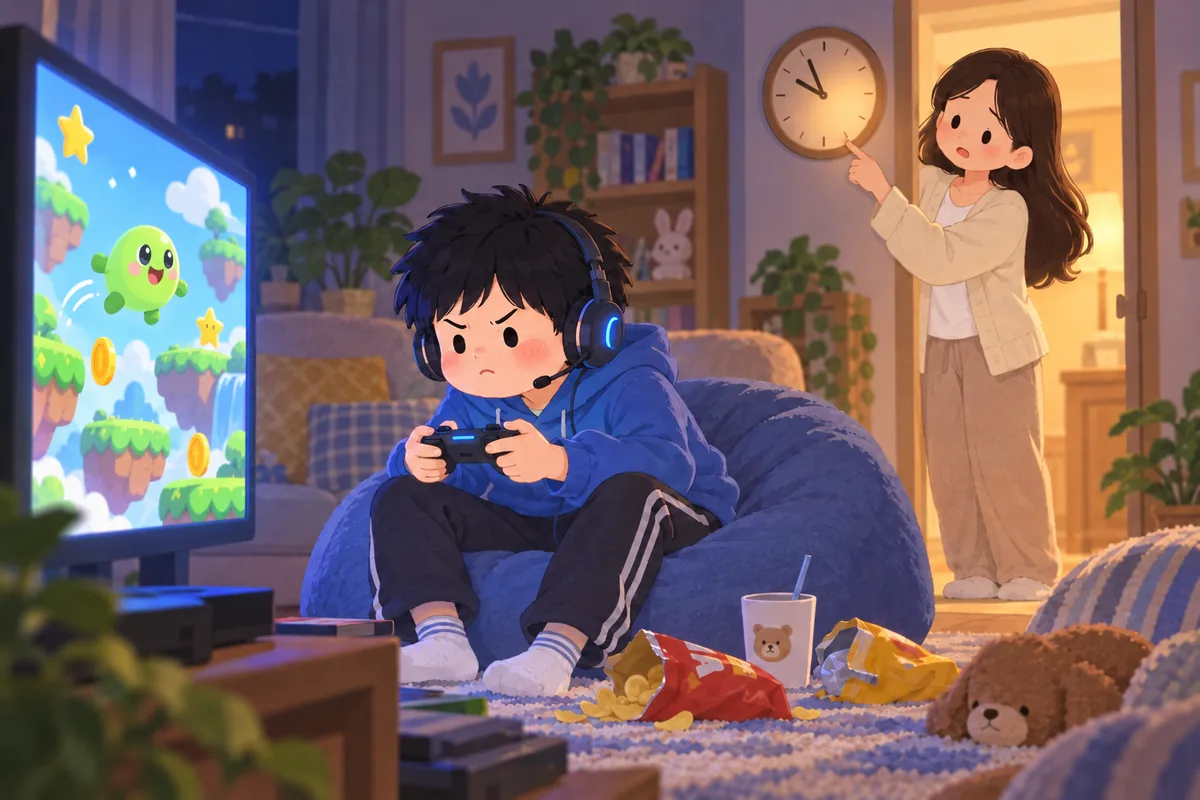
It's 9 p.m. And your child is still gaming online with friends. After three warnings, Mum or Dad pulls the plug. Your child yells, “The team lost because of you!” and slams the door. The house is silent all evening.
What your child may be feeling
In online games, friends are waiting; stopping mid-match can make your child feel they're letting the team down. Many games are designed to keep you playing, so stopping is genuinely hard.
What to do in the moment
- Agree time and rounds before playing, in the game's units, like “Two matches” rather than minutes.
- Give a warning before time's up, and let them finish the round they're in.
- Take an interest in your child's game, watch or play sometimes; rules get easier to talk about.
- Agree that your child won't share their real name or school, or send photos, to anyone in a game, and that if someone makes them uncomfortable, they can tell Mum or Dad without getting in trouble.
Try saying this
Mum or Dad knows this match matters to you. Finish this one, then switch off. Next time we'll agree the time before you start.
Instead of All you do is game. It'll rot your brain. Give me that phone.
Why it helps
Gaming is part of social life at this age. The AAP recommends a family media plan with screen-free times like meals and bedtime. Cutting off suddenly causes more conflict than agreeing ahead.
Source: AAP Family Media Plan (HealthyChildren.org); WHO, gaming disorder (ICD-11)
Every child handles it differently
In the app: the way that fits your child's energy (some answer at once to a yes-or-no question, some need time first), a 3-day plan to try, and a word for you.
See a professional when
If gaming keeps affecting sleep, school or mood, or your child has lost interest in almost everything else, talk to a paediatrician or another professional.
Ideas to try and adapt, not a diagnosis. Every child is different.
Have a question about this?
Ask other parents and the Family Blueprint team in our community. Read what other homes asked first, no sign-up needed.
Ask in the community