Situations by age · Ages 15-18
Wants to go out at night, stay late or sleep over: what helps
The moment
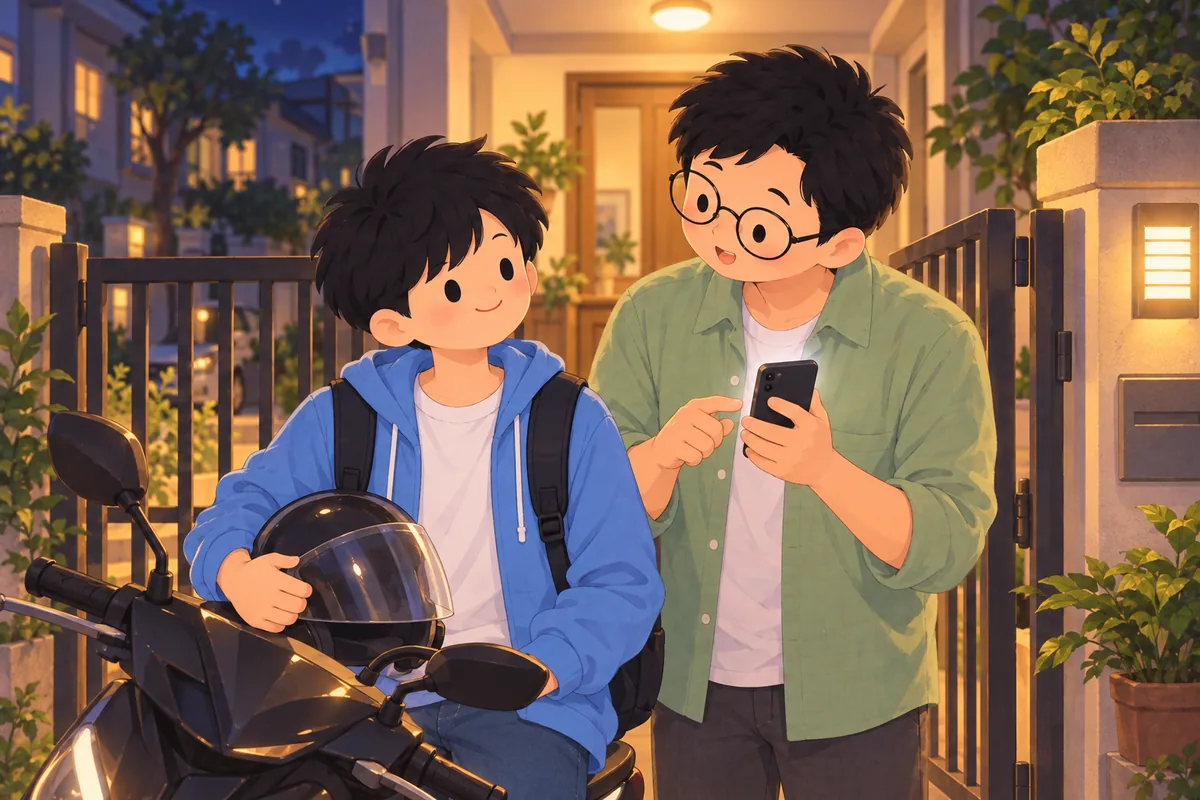
On Friday, your child, in Grade 11, asks to go to a friend's birthday party at a place near the university: “It finishes at midnight, and I'll sleep over at their house. Everyone's going.” Mum or Dad doesn't know that friend's parents, pictures motorbikes, alcohol and late-night roads, and wants to say “No” on the spot.
What your child may be feeling
For your child, going with friends means belonging, and a sign of growing up. A flat no without listening may feel like Mum or Dad doesn't trust them, and your child may sneak out instead.
What to do in the moment
- Get the details before answering: where, with whom, whether adults are there, how they'll travel and when they'll be back. Get a friend's or host parent's number, and give them a quick friendly call.
- Agree a home time and check-ins that actually work: a text on arrival and on leaving, location sharing for that night only if your child agrees. Start with a time Mum or Dad is comfortable with, then extend it as your child keeps to it.
- Plan for safety ahead: no riding with anyone who has been drinking or is sleepy, a helmet on every ride, no drinks from strangers, and a “Code word” your child can text so Mum or Dad calls them home right away without your child losing face.
Try saying this
“I want you to have fun with your friends, and I want you home safe. Let's go through the details: who's going, how you'll get home. And if anything feels off, call me any time. I'll come and get you, no questions that night.”
Instead of “No. Good kids don't go out at night.”
Why it helps
In GSHS 2021, fewer than half (42.8%) of Thai students aged 13–17 said their parents usually knew what they did in their free time. The US CDC advises knowing where teens this age are and with whom, respecting their privacy, and planning ahead for getting home safely. The AAP suggests widening independence step by step as teens show responsibility. The US NIAAA warns that someone too drunk to wake is a medical emergency and should never be left alone to sleep it off. If you can't reach your child for an unusually long time, or there's an emergency, call 1669 or 191.
Source: WHO/Thai Ministry of Public Health, GSHS Thailand 2021 Fact Sheet; CDC, Positive Parenting Tips: Teenagers (15–17 years); AAP HealthyChildren.org, Stages of Adolescence (2024); NIAAA, Understanding the Dangers of Alcohol Overdose
Every child handles it differently
In the app: the way that fits your child's energy (some answer at once to a yes-or-no question, some need time first), a 3-day plan to try, and a word for you.
See a professional when
If your child can't be reached and no one knows where they are, has run away, or comes home so drunk they can't be woken, with slow breathing or pauses in breathing, repeated vomiting, or cold, pale skin, don't leave them alone; call 1669 now. If you suspect they've been hurt or taken, call the police on 191.
Ideas to try and adapt, not a diagnosis. Every child is different.
Have a question about this?
Ask other parents and the Family Blueprint team in our community. Read what other homes asked first, no sign-up needed.
Ask in the community