Situations by age · Ages 1-5
Hitting or biting when upset: what helps
The moment
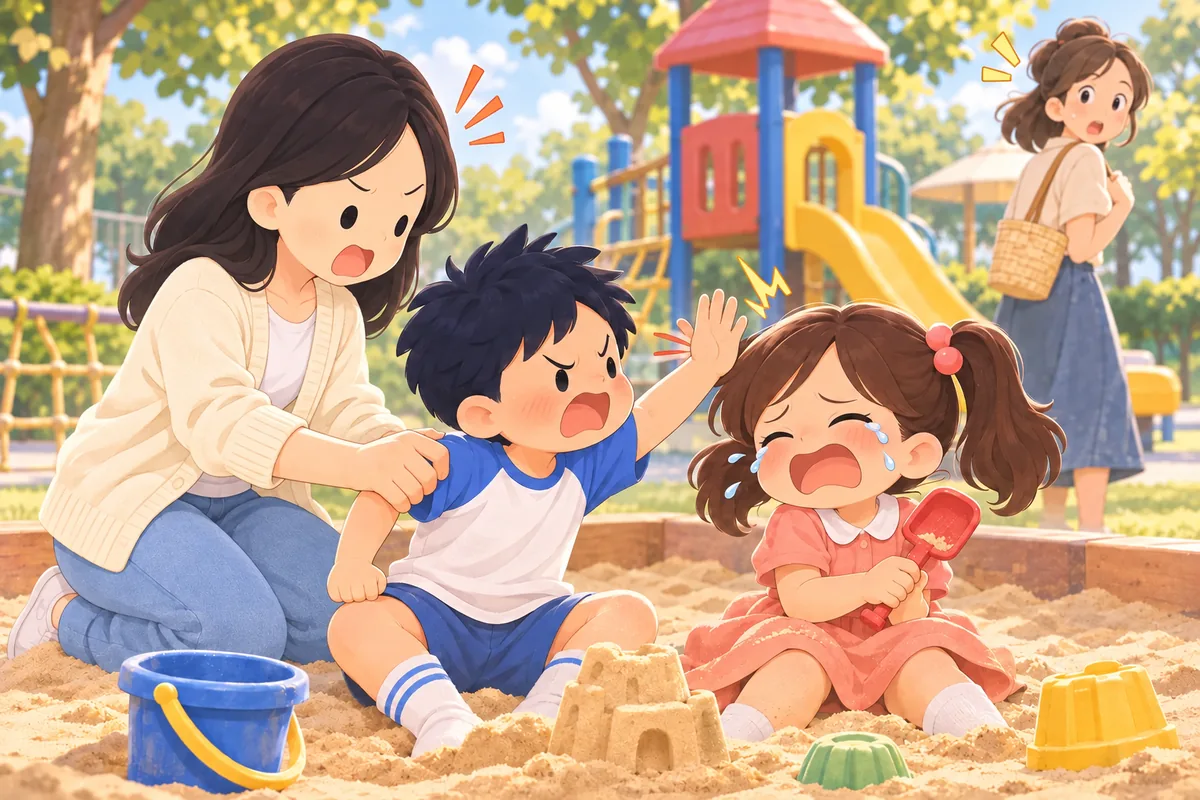
At the playground, a friend takes your child's sand spade. Your child hits the friend on the head straight away and the friend bursts into tears. The friend's mother turns to look. Mum or Dad, embarrassed and shocked, yanks your child's arm and scolds loudly in front of everyone.
What your child may be feeling
Your child can't put feelings into words fast enough yet. When angry or losing something they love, hands move before words. It isn't meanness.
What to do in the moment
- Hold your child's hand gently but firmly, move them away, and check on the child who was hit.
- Name the feeling for your child, like “Angry” or “Upset”, then show what they can do instead.
- Practise short words when calm, like “Stop” or “Mine”, and praise every time they use words instead of hands.
Try saying this
Mum or Dad won't let you hit. Hitting hurts. You're angry your friend took the spade, right? You can say, “That's mine, give it back.”
Instead of You hit your friend? Let's see how you like being hit.
Why it helps
Hitting and biting are common in young children because self-control is still developing and they have few words. Calm, clear, consistent responses teach faster than spanking, which research links to more aggression.
Source: AAP HealthyChildren.org (Aggressive Behavior); AAP policy statement “Effective Discipline to Raise Healthy Children” (2018)
Every child handles it differently
In the app: the way that fits your child's energy (some answer at once to a yes-or-no question, some need time first), a 3-day plan to try, and a word for you.
See a professional when
If hitting or biting is still frequent after about age 4–5, often hurts others, or your child speaks much less than others their age, talk to a paediatrician.
Ideas to try and adapt, not a diagnosis. Every child is different.
Have a question about this?
Ask other parents and the Family Blueprint team in our community. Read what other homes asked first, no sign-up needed.
Ask in the community