Situations by age · Ages 13-18
Riding a motorbike without a helmet: what helps
The moment
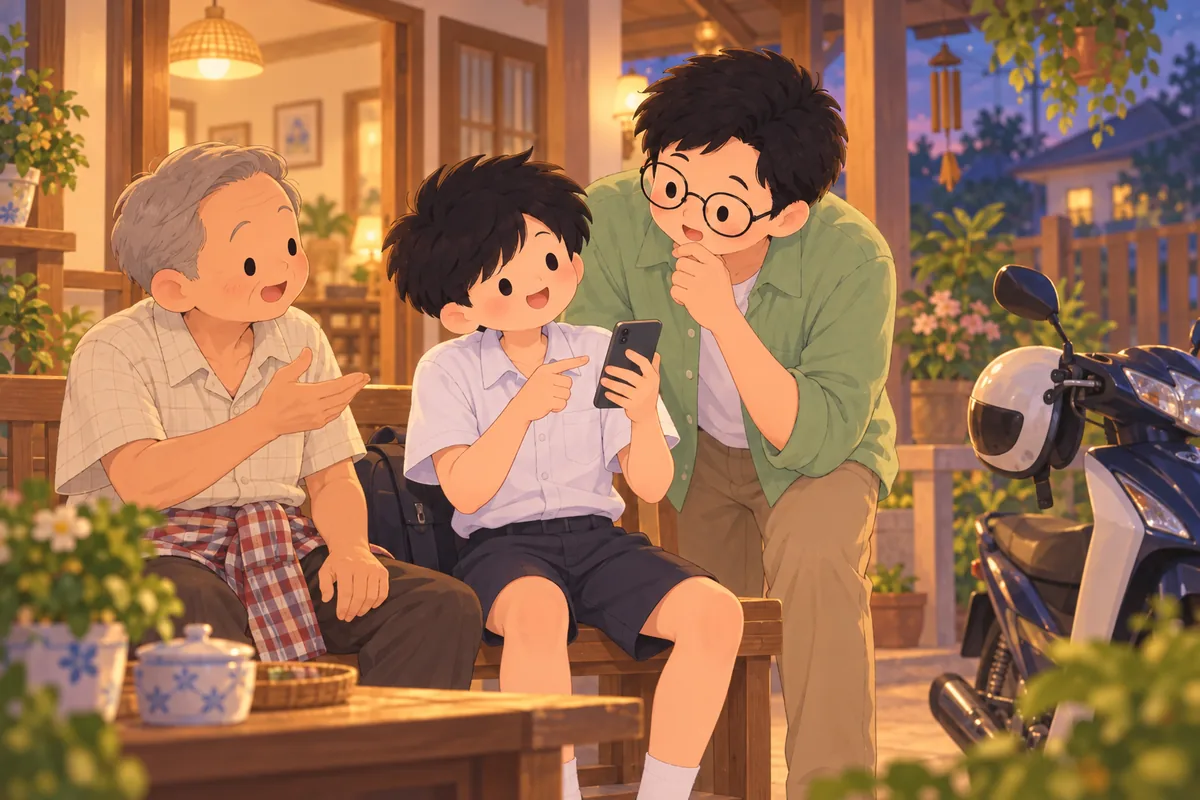
Driving past the school one evening, Mum or Dad sees your child, fourteen, riding three to a motorbike with friends, nobody in a helmet, and the rider about the same age. Back home, your child asks for a motorbike: “All my friends ride themselves to tutoring now.” Grandpa adds, “In our day we rode from age ten.”
What your child may be feeling
To your child, a motorbike means freedom and belonging. A helmet may seem uncool, hot or bad for their look. And a teen brain tends to underestimate risk, especially around friends.
What to do in the moment
- Set non-negotiable rules: a helmet with the chin strap done up on every trip, riding or pillion; no three to a bike; no getting on behind someone who's been drinking or speeds. And Mum or Dad does the same every time.
- Buy a helmet certified to the Thai industrial standard (TIS 369-2557) and let your child pick a style they like so they'll actually wear it. Keep it next to the keys so it's the easiest thing to grab.
- Talk about riding with real facts: in Thailand, 15–17-year-olds can only get a licence for motorbikes up to 110 cc; bigger bikes have to wait until 18. Plan together to take lessons, pass the licence test and practise somewhere safe first, then widen the distance as your child is ready.
Try saying this
“I get that you want to get around on your own like your friends. Let's talk about when you'll be ready to ride, and how you'll get to tutoring until then. But a helmet on every trip isn't up for debate in our family.”
Instead of “If you crash, don't come crying to me. Do what you like, I've given up.”
Why it helps
The WHO says road traffic injuries are the leading cause of death for people aged 5–29, and wearing a helmet correctly greatly lowers the risk of dying. In Thailand, integrated three-database road injury and death data for 2024, published by ThaiHealth, show 15–19-year-olds have the highest road-death rate, and about 80% of vehicles in crashes are motorbikes. So a parent's example, proper safety training and clear rules help a lot. After a fall, if your child hit their head, has a worsening headache, vomits or is unusually drowsy, see a doctor straight away, even with no visible injury.
Source: WHO, Road traffic injuries fact sheet (2026); Integrated three-database road injury and death data 2024 (Ministry of Public Health, Royal Thai Police, Road Accident Victims Protection Co.), as published by the Thai Health Promotion Foundation (2025); Department of Land Transport, driving licence ages; NIMH, Warning Signs of Suicide (reckless risk-taking)
Every child handles it differently
In the app: the way that fits your child's energy (some answer at once to a yes-or-no question, some need time first), a 3-day plan to try, and a word for you.
See a professional when
After a fall or crash, if your teen hit their head, blacked out even briefly, has a worsening headache, vomits more than once, or is unusually drowsy or confused, call 1669 or go to hospital now, even with no visible injury. If they keep speeding, racing or riding after drinking despite your talks, consider the school counsellor or a doctor, since reckless risk-taking can be a sign of distress.
Ideas to try and adapt, not a diagnosis. Every child is different.
Have a question about this?
Ask other parents and the Family Blueprint team in our community. Read what other homes asked first, no sign-up needed.
Ask in the community