Situations by age · Ages 3-9
Afraid of the dark, nightmares: what helps
The moment
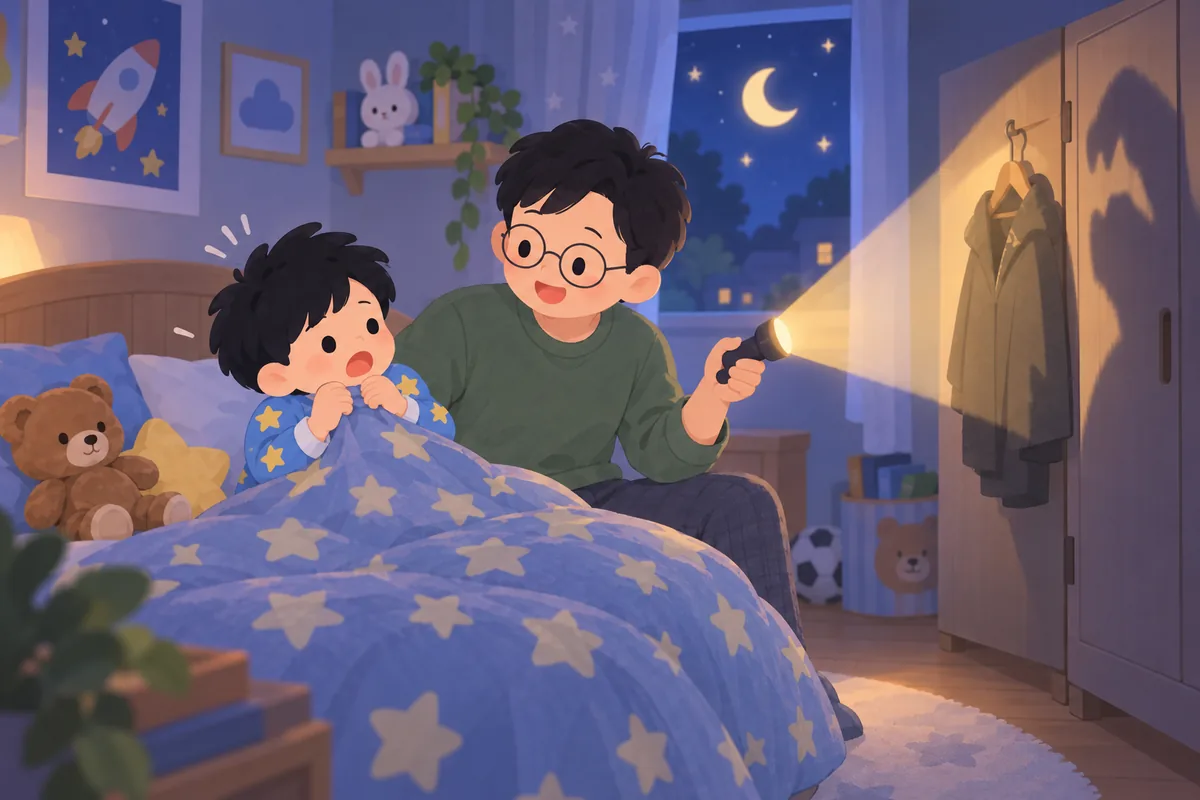
2 a.m. On Wednesday, your child knocks on Mum or Dad's door: there's a monster under the bed, can they sleep with you? It's the fourth night this week. Mum or Dad can barely keep their eyes open and says, “There's nothing there. Go back to bed.”
What your child may be feeling
To your child, the fear is very real. Imagination is growing fast at this age, and at night it's hard to tell what's in their head from what's real.
What to do in the moment
- Acknowledge the fear first. If your family plans for separate beds, calmly walk them back and sit with them a while. If you already sleep together, stay close and soothe them until they settle.
- Give tools that feel in control: a night light, a ‘guard’ teddy, or a small torch.
- Avoid scary stories or clips in the evening, and talk about something nice before sleep.
Try saying this
You're really scared, aren't you? Mum or Dad is here. Shall we turn on the little light? Mum or Dad will sit with you until you fall asleep.
Instead of You're too old to be scared of ghosts. Don't be a baby.
Why it helps
Fear of the dark and nightmares are common from preschool to early primary, as imagination grows faster than understanding of the real world. Consistent comfort without teasing helps children feel safe and fall asleep on their own.
Source: AAP HealthyChildren.org (Nightmares and Night Terrors); Raising Children Network
Every child handles it differently
In the app: the way that fits your child's energy (some answer at once to a yes-or-no question, some need time first), a 3-day plan to try, and a word for you.
See a professional when
If nightmares are very frequent and affect sleep or daytime life, or started after a stressful event, talk to a paediatrician.
Ideas to try and adapt, not a diagnosis. Every child is different.
Have a question about this?
Ask other parents and the Family Blueprint team in our community. Read what other homes asked first, no sign-up needed.
Ask in the community