Situations by age · Ages 4-10
Saying sorry after a fight: what helps
The moment
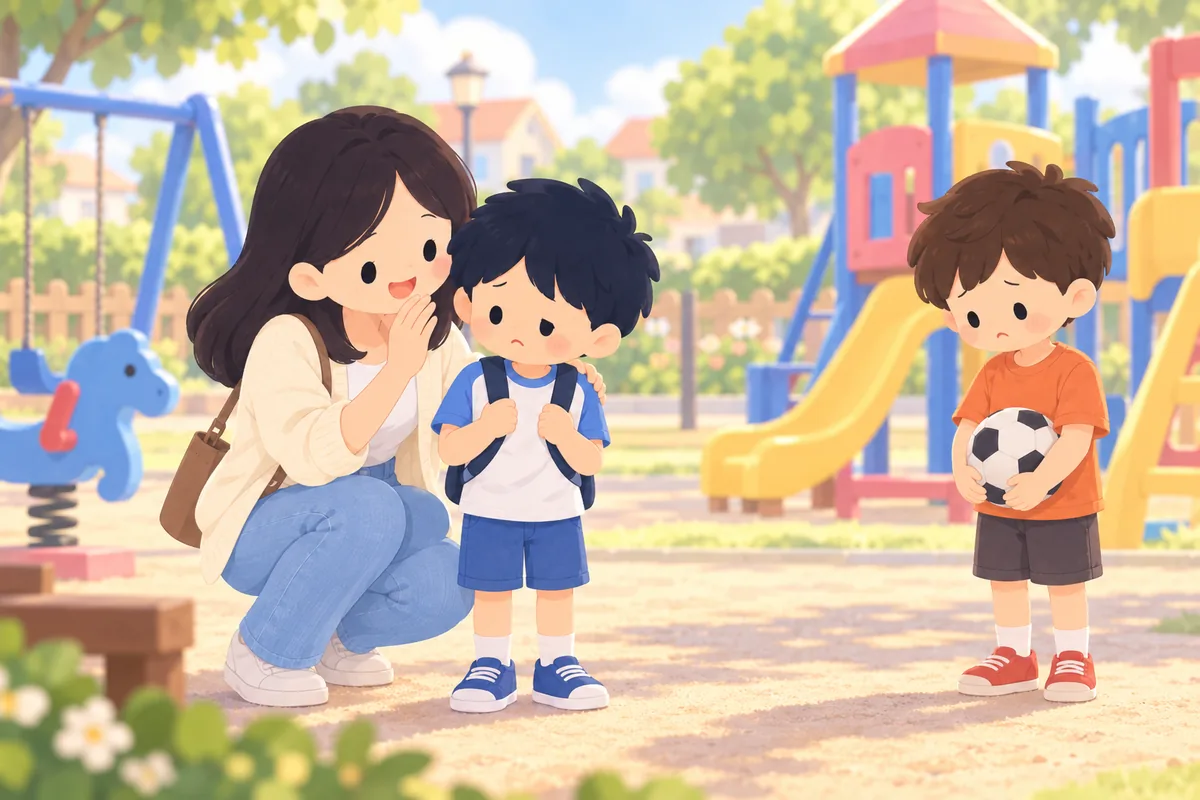
At the playground, your child and a friend fight over the swing, and your child pushes the friend to the ground. The friend cries. Another parent looks over at Mum or Dad. Mum or Dad walks up and tells your child to say sorry, but your child crosses their arms, scowls and says, “No! They grabbed it first.” Mum or Dad feels like everyone is waiting to see what happens next.
What your child may be feeling
Your child may still be angry and feel they were wronged first. Being told to apologise in front of others can feel so embarrassing that they shut down.
What to do in the moment
- Tend to the friend who fell first, with your child beside you to see that the friend is hurt.
- Take your child a little away from others to calm down. Accept the anger, but be clear that pushing isn't okay.
- Once calm, think together about what could help the friend feel better: a sorry, offering something, or inviting them to play.
Try saying this
“You were angry your friend grabbed the swing. Mum or Dad understands. But pushing isn't okay. Let's go see how your friend is.”
Instead of “Say sorry right now or we're going home.”
Why it helps
A meaningful apology comes from understanding how the other person feels, which children learn gradually when adults help them notice others' feelings. Forcing an instant sorry often gets only words, while helping them repair the friendship builds empathy over time.
Source: UNICEF Parenting
Every child handles it differently
In the app: the way that fits your child's energy (some answer at once to a yes-or-no question, some need time first), a 3-day plan to try, and a word for you.
Ideas to try and adapt, not a diagnosis. Every child is different.
Have a question about this?
Ask other parents and the Family Blueprint team in our community. Read what other homes asked first, no sign-up needed.
Ask in the community