Child won't sleep and fusses at bedtime? What to try

It's 9:30 at night.
Your child wants water, then the bathroom, then one more story.
The moment you switch off the light, they sit up and start to cry.
And you, after a long day, feel like your patience is down to the last drop.
If your child won't sleep and fusses like this almost every night, I want to say this first: nearly every family goes through it. Plenty of us have sat by the bed counting the minutes, half wishing they'd just fall asleep, half feeling guilty for being annoyed.
A child fussing at night usually doesn't mean they're being difficult on purpose, or that you're doing it wrong. Often their body and mind simply aren't ready to stop yet.
Here are five things to try. You don't need all of them in one night. Pick one, try it for about a week, and see what happens.
1. First, notice why they're fussing
A child who won't sleep may not have the same reason every night. Some nights they're overtired and cranky. Some nights they're not sleepy at all because the afternoon nap ran long. Some nights they're scared of the dark, or they just want a bit more time with you because they barely saw you all day.
Try noticing for three or four nights what happened before the fussing started. Did they nap? Was it a big play day? How much time did they get with you? Once you see a pattern, it's easier to choose how to respond.
2. Dim the lights and quiet the house about an hour before bed
Many kids need time to slowly power down before sleep. If they've just been running around, watching a screen or playing something exciting, and then get taken straight to a dark bedroom, their body hasn't caught up yet.
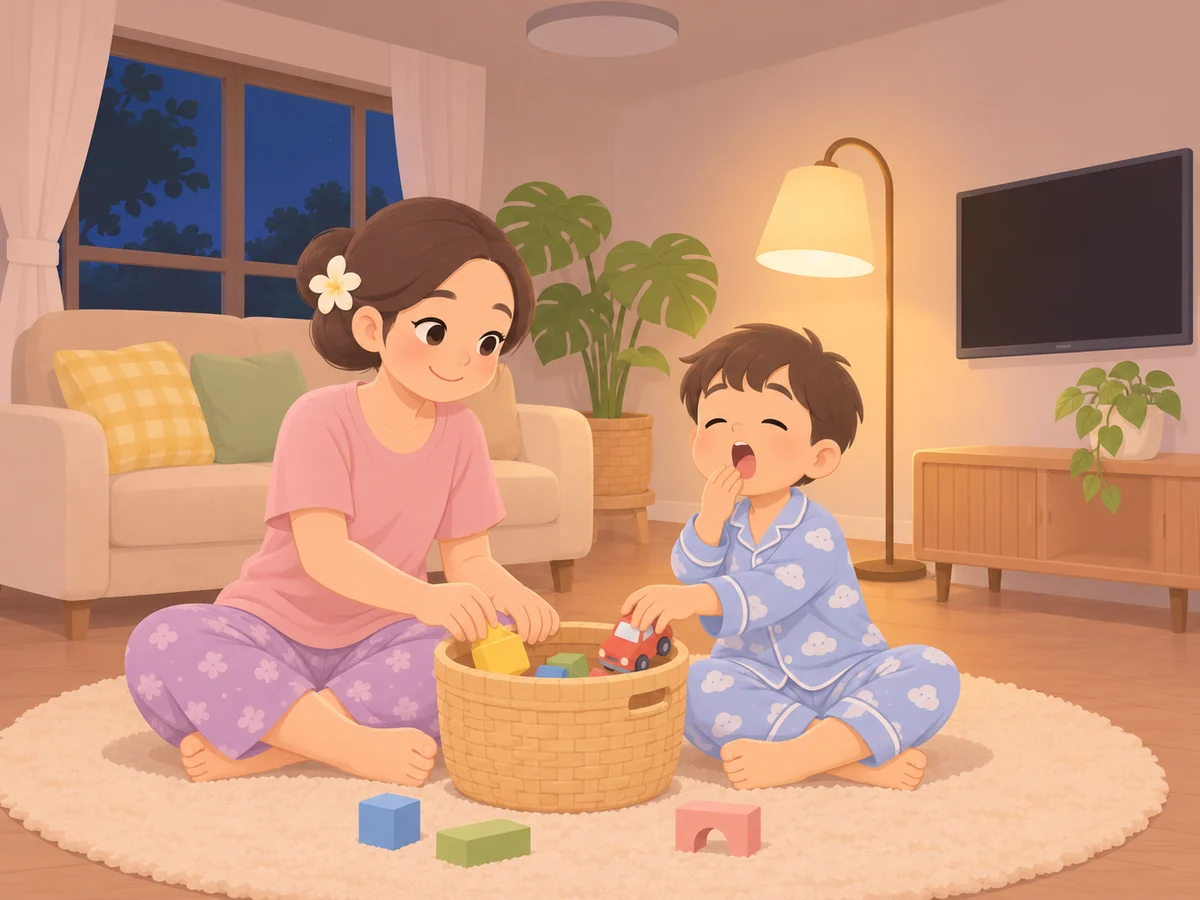
Try switching off the big lights and leaving just a warm lamp, turning off the TV and other screens, and doing something slow together, like putting toys back in a basket, a puzzle, or a picture book. A quieter house often helps a child settle down too.
3. Keep the same steps every night, and let them choose a little
Kids feel safe when they know what comes next. Try a simple order you repeat every night, like bath, brush teeth, bedroom, one story, a hug, lights off, until your child knows it by heart.
Then add small choices: "Which book tonight?" or "Blue pajamas or yellow?" Kids who get to choose a few things often fuss less, because they don't feel ordered around about everything. If it doesn't work on the first night, that's fine. Give it some time.
4. Stay with their feelings first, and save the lesson
When a child is crying at bedtime, the easiest thing to say is "Go to sleep, you have to get up early tomorrow." That's true, but in that moment they can't take in reasons.
Try sitting down by the bed so your face is at their level, and say something short like "You don't want to sleep yet, huh? I'm right here." Then stay quiet and just be there for a while. Many kids calm down faster than you'd expect when they feel understood rather than pushed to sleep.

5. Look after your own energy too
Kids pick up very quickly when we're rushed or irritated. The more we hurry, the more they cling. If you feel completely out of energy some nights, try taking turns with your partner or someone else at home so the other person does bedtime.
And if a night doesn't go to plan and they fall asleep late, it doesn't mean you've failed. Raising kids is trying, getting it wrong, and adjusting. You can try again tomorrow. If you're stuck, talk it over with someone you trust. Sometimes saying it out loud helps you see the way.
How Human Design looks at a child who won't sleep
Human Design is an energy-based system that sees each person as using and restoring energy differently. If it's new to you, start with What is Human Design.
Through this lens, there are a few sleep ideas worth noticing:
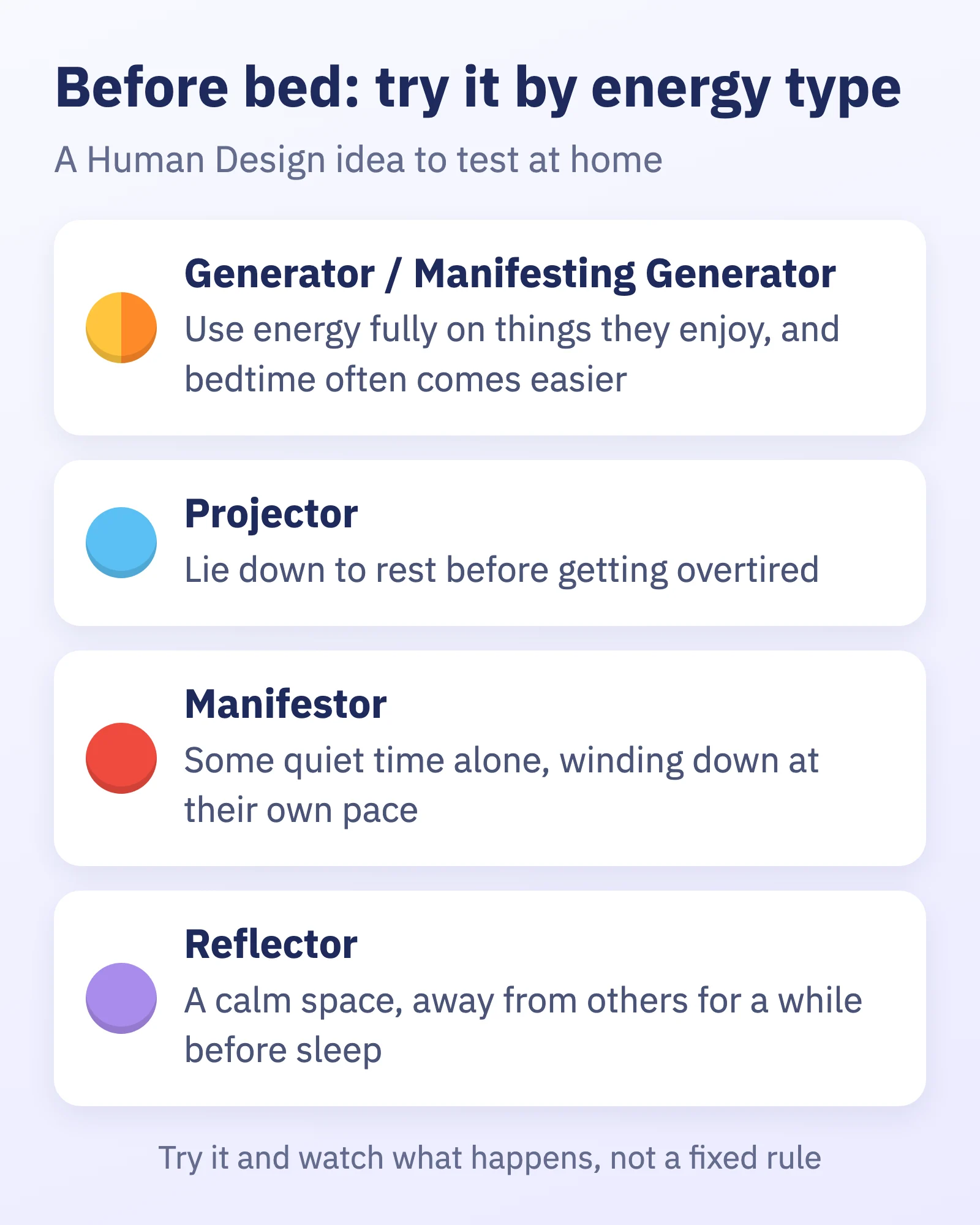
- Generators and Manifesting Generators have energy that can keep going for a long time. On days they use it fully on things they enjoy, they often go to bed more easily than on days when energy is left over.
- Projectors don't have that kind of energy all day. Lying down to rest before they get overtired, like reading in bed, may help them avoid reaching the fussy point.
- Manifestors often like to wind down at their own pace. Some quiet time on their own before bed may work better than being hurried.
- Reflectors are sensitive to the energy of people around them. A calm corner, away from the bustle of the house for a while, may help them feel lighter before sleep.
Just to be clear, this is one more lens for noticing, and research doesn't confirm it. Try it, watch how it goes with your own child, and set it aside if it doesn't fit. You know your child best. And if bedtime battles leave you feeling like you and your child aren't getting through to each other, When parents don't understand their child may help too.
In Family Blueprint, we turn everyone's chart into an easy-to-read energy guide, for your child and for you, so you can see how each person rests and shape the hour before bed around your family. See an example at Human Design chart.
Curious what your child is like?
Family Blueprint calculates an energy chart for everyone at home and writes it up as an easy-to-read guide for noticing and talking together.
Start freeSee plans and pricesWhen to talk to a doctor
If your child snores loudly most nights, struggles to breathe or seems to pause breathing during sleep, often wakes up screaming in the night, is very sleepy or cranky during the day for a long stretch, or if sleep problems are affecting eating, school or mood enough to worry you, talk to a pediatrician first. Some sleep problems have physical causes that an energy chart can't answer.
This article is a perspective for reflection and learning. It is not a diagnosis and does not promise any result.
Questions parents often ask
My child fusses about sleep every night. Should I let them cry it out?
Families choose differently. You could start by sitting nearby so your child knows you're there, then move a little farther away over the next nights. If you're unsure, ask your pediatrician what suits your child's age.
Can screen time before bed help them fall asleep?
Many kids find it harder to fall asleep after screens, because of the light and the excitement. Try swapping it for a story or a quiet activity in the hour before bed, and see whether sleep comes more easily.
Siblings share a room and keep each other awake. What can we do?
Try staggering bedtimes by about fifteen minutes, or take the one who isn't sleepy yet to do something quiet in another spot first. It's normal for kids to be ready for sleep at different times.
Try your family's energy guide
Add the birth date, time and place of the people at home, then read the ideas that fit each of them. Try one at a time and keep only what works for your family.
Start freeSee plans and pricesHave a question about this?
Ask other parents and the Family Blueprint team in our community. Read what other homes asked first, no sign-up needed.
Ask in the communityRelated situations, with words you can use
 Won't go to bed: what helpsWon't go to bed? Your child may just want a little more time close to Mum or Dad, because bedtime means being apart all night. Some nights the body is t…
 Waking often at night: what helpsWaking often at night? Waking at night is normal for little ones. Their sleep cycles are shorter than adults'; between cycles, your child may need whate…
 Afraid of the dark, nightmares: what helpsAfraid of the dark, nightmares? To your child, the fear is very real. Imagination is growing fast at this age, and at night it's hard to tell what's in…
Keep reading
 Manifesting Generator in Human Design: for parents and kidsWhat is a Manifesting Generator in Human Design? Why some people juggle many things, move fast and skip steps, and how to make that energy easier at home.
 Family problems and solutions you can start at homeCommon family problems, from the same old fights to talking less and running on empty, and five small solutions you can start at home today, one step at a time.
 How to find yourself when you don't know what you likeHow to find yourself when you feel lost and don't know what you like: five small ways to start noticing yourself again, for working adults, parents and teens.