Generator in Human Design: what it means for parents and kids

A lot of parents first wonder what a Generator in Human Design is after a scene like this.
Your kid can build with blocks for an hour without getting bored, and run around all evening without running out of steam. Then you say "time for homework" and it's as if someone pulled the plug. Dragging feet, grumbling, snapping at everyone in the house.
Or maybe it's you. You take on everything: the housework, the job, the school stuff. You really can go all day. But by evening you feel irritable, and you can't quite say why.
If you've spotted the word Generator in your child's Human Design chart, or your own, and it still feels fuzzy, let me explain it the down-to-earth way: what this kind of energy looks like in real life, as a kid and as a parent, and what you could try as soon as this evening.
If Human Design is completely new to you, it may help to read What is Human Design? A beginner's guide first.
What is a Generator, in short
Generator is one of the five types in Human Design. In the Family Blueprint app the Thai name is นักสร้าง, roughly "the builder." Human Design says about one in three people are Generators, and if you count Manifesting Generators too, it's about seven in ten. So there's a good chance at least one person in your home is one.
Human Design sees a few things as typical of Generators:
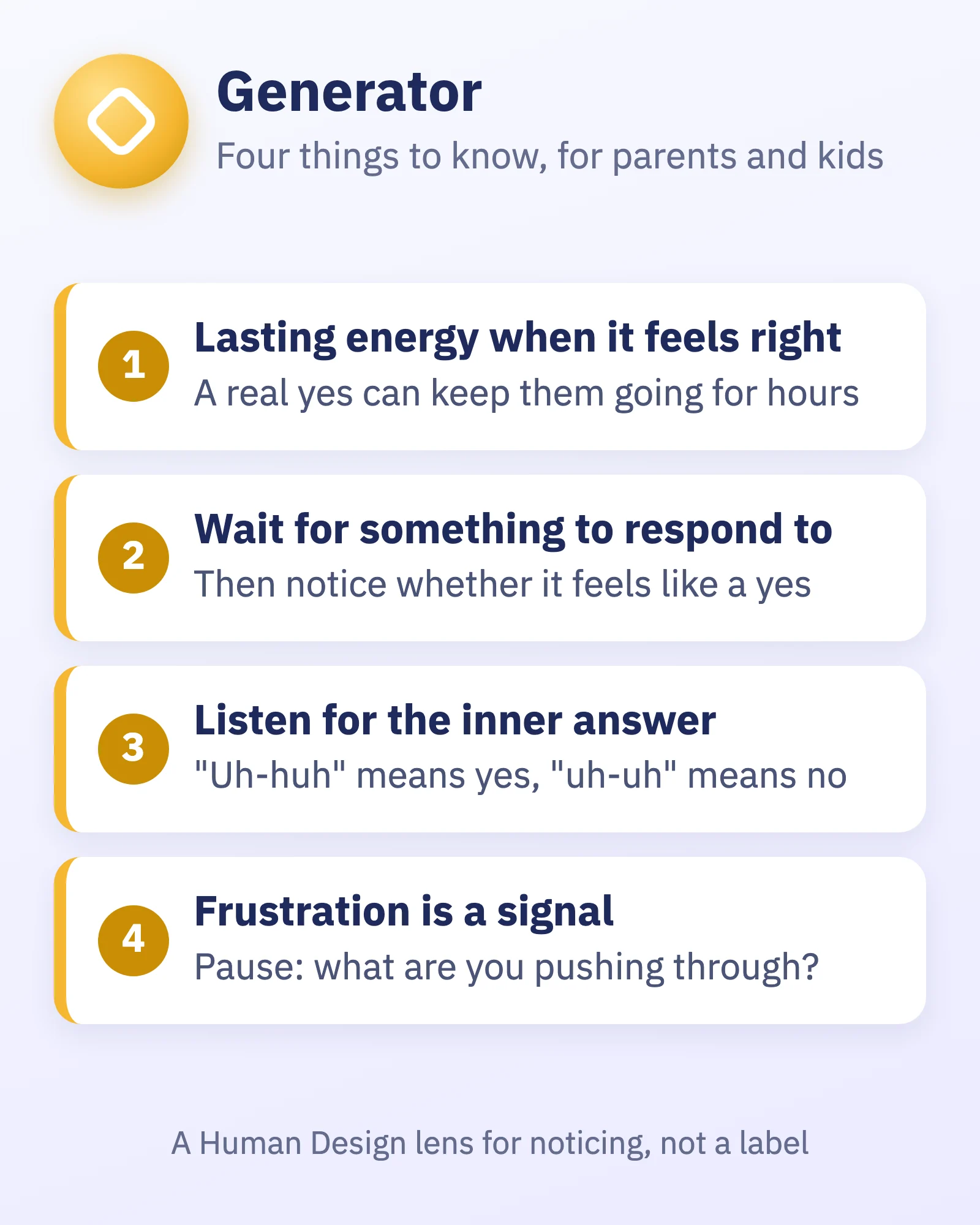
- Lasting energy for what feels right. When something is a yes for them, they can keep at it long enough to amaze the people around them.
- Wait for something to come, then notice whether you respond to it. Instead of chasing everything, notice the invitations, tasks and questions that come your way.
- An inner answer. Some people actually make the sound out loud: "uh-huh" for yes, "uh-uh" for no, sometimes before their head has finished thinking.
- Frustration is a signal. If you feel frustrated a lot, it may be worth pausing to see whether you're pushing through something you never really said yes to. The opposite feeling, a quiet satisfaction after doing something, is the sign you're on track.
Type isn't guessed from personality. It comes from the actual chart. A Generator is someone whose Sacral center (the life-force center) is colored in, while none of the motor centers (Sacral, Root, Solar Plexus or Heart) connects to the Throat center (the communication center), either directly or through other centers. If one does, the person is a Manifesting Generator instead. To see where to look, read How to read a Human Design chart.
If your child is a Generator, notice these four things
If any of these don't fit your child, skip them. The chart is just a way of noticing. You're the one who knows your child best.
1. Ask yes-or-no questions
Instead of "go take a bath," try "All done playing? Ready for a bath?" If that doesn't land, hold up two options and let them pick. Many Generator kids find a yes-or-no question easier than a wide-open one like "what do you want to do today?" Have you ever noticed how different your child's face looks when they say "uh-huh" because they mean it, compared to when they're just answering because they have to?
2. Let the energy out before sit-still tasks
If your child comes home with a full tank and you sit them down for homework right away, it can be a struggle. Try 15 to 20 minutes of moving first: dancing, jumping, a game of tag in the house. Then start. Human Design says Generators fall asleep more easily when they've used their energy on things they enjoy that day. Try it for a week and see what happens in your own home.

3. Getting stuck isn't a reason to quit right away
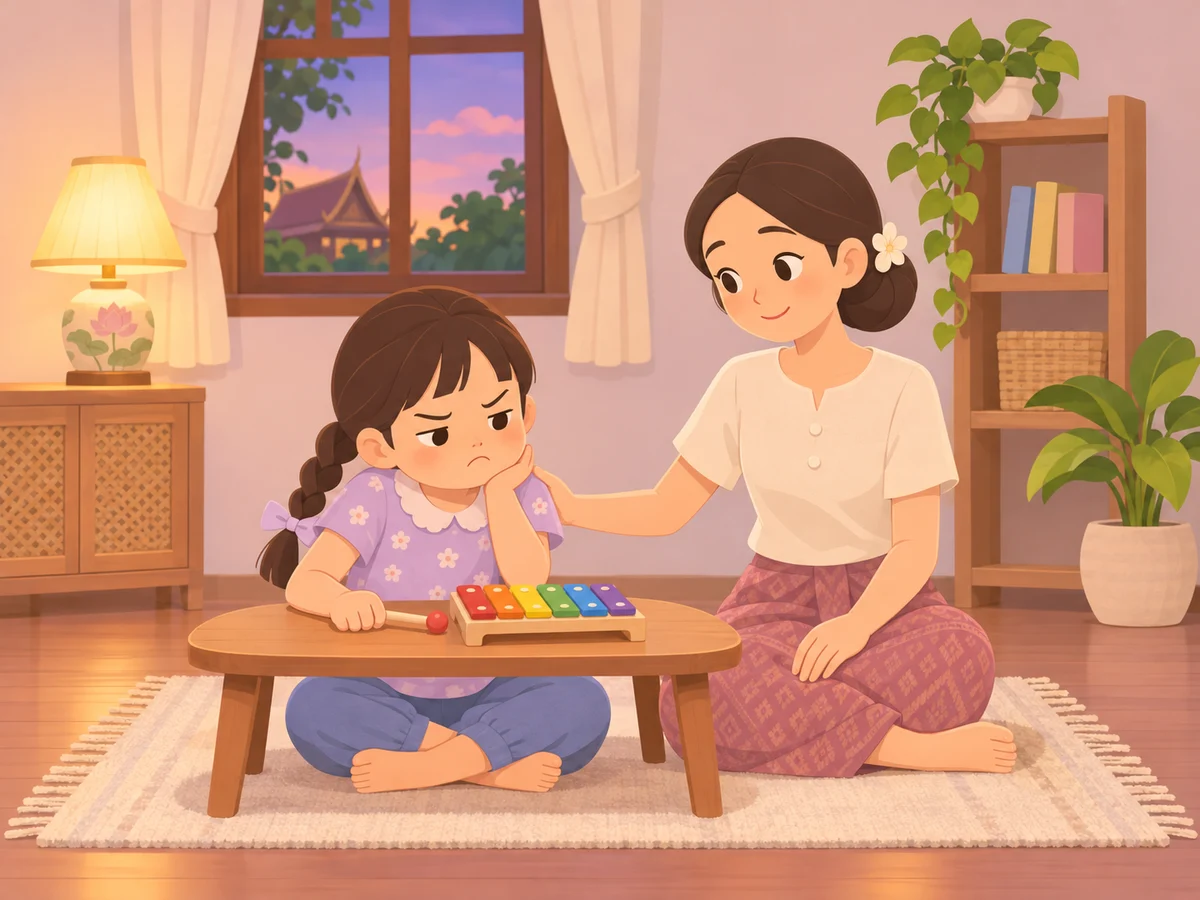
Kids learning music, swimming or anything new often hit a stretch where nothing seems to improve. Generators tend to get very frustrated here. Try just sitting beside them, without rushing to fix it, and later ask, "Do you still want to keep going?" If the answer is still "uh-huh," take a break and come back. If it's "uh-uh" again and again for days, that's useful information for the next conversation.
4. Hold off on the word "lazy"
A child who drags their feet on some things may not be lazy at all. They just haven't felt a yes for it yet. What needs doing still needs doing, but try letting your child choose part of it, like which subject to do first, or which chore to help with. They may find more energy for it than you expect.
If you're a Generator parent
Generator parents are often the ones who "can handle it." You can go all day, so you take on everything and forget to ask yourself what you actually want to do.
Here are three things to try:
- Check inside before saying yes. When someone asks for help, pause for a second and notice whether the answer inside is "uh-huh" or "uh-uh." You don't have to say no to everything. Just notice whether you're saying yes because you want to, or because you feel you should.
- Notice your frustration. If you're snapping at your kids more than usual, ask yourself whether you pushed through a lot that day. Sometimes the problem didn't start with the kids at all.
- Save some energy for something you love. One thing a day, maybe cooking a dish or anything that makes you happy. Parents who refill their own tank have more left to give their kids.
If you're unsure about saying yes to something big, try talking it through with someone you trust first. Saying it out loud often makes the inner answer clearer.
How to use the Generator idea without pressure
Human Design is an energy-based system that scientific research hasn't confirmed. So I use it as a lens for noticing. Please don't turn it into a rule that your child must say "uh-huh" before everything, or never has to do anything they don't feel like doing. Your child doesn't have to be what the chart says, or what we expect either. I'm still learning by trial and error every day too.
Curious who at home is a Generator? Don't guess from who works hardest or has the most energy. Family Blueprint works it out from everyone's birth date, time and place, then explains it as an energy guide, one chapter at a time. See an example at Human Design chart.
Curious what your child is like?
Family Blueprint calculates an energy chart for everyone at home and writes it up as an easy-to-read guide for noticing and talking together.
Start freeSee plans and pricesWhen you're worried, talk to a professional
If your child's frustration or mood swings are strong enough to affect eating, sleep or school, or they seem unusually tired, don't put it down to their chart type. Talk with a pediatrician or a child psychologist first. A chart can't replace a check-up.
This article is a perspective for reflection and learning. It is not a diagnosis and does not promise any result.
Questions parents often ask
What's the difference between a Generator and a Manifesting Generator?
Both have a colored-in Sacral center and both wait for something to respond to. The difference is that Manifesting Generators tend to move fast, do several things at once and skip steps, while Generators tend to go step by step until they master something.
If my child is a Generator, should they choose everything themselves?
Not quite. Some decisions are still yours to make for their age. Just try adding yes-or-no questions where your child can choose, and see whether cooperation gets easier.
My child rarely says "uh-huh" or "uh-uh" out loud. Does that mean the chart is wrong?
Not necessarily. Every child shows it differently. Some answer with their face, some just move toward the thing they want. It's better to notice your own child's way.
Try your family's energy guide
Add the birth date, time and place of the people at home, then read the ideas that fit each of them. Try one at a time and keep only what works for your family.
Start freeSee plans and pricesHave a question about this?
Ask other parents and the Family Blueprint team in our community. Read what other homes asked first, no sign-up needed.
Ask in the communityRelated situations, with words you can use
 Asked to help, they moan and don't: what helpsAsked to help, they moan and don't? Chores can feel boring, and your child is used to adults doing them. Being asked out of the blue mid-rest feels unfa…
 Refusing homework: what helpsRefusing homework? Your child may feel the work is too big to start, or be afraid of getting it wrong. Getting up again and again can be a way to escape…
 You say no, and they do it again: what helpsYou say no, and they do it again? Your child is exploring what happens next. Memory and the brakes on impulses are only just starting to grow, so “No” d…
Keep reading
 Manifesting Generator in Human Design: for parents and kidsWhat is a Manifesting Generator in Human Design? Why some people juggle many things, move fast and skip steps, and how to make that energy easier at home.
 Family problems and solutions you can start at homeCommon family problems, from the same old fights to talking less and running on empty, and five small solutions you can start at home today, one step at a time.
 How to find yourself when you don't know what you likeHow to find yourself when you feel lost and don't know what you like: five small ways to start noticing yourself again, for working adults, parents and teens.