Projector in Human Design: what it means for parents and kids

A lot of parents first wonder what a Projector in Human Design is after a moment like this one.
Your kid gets home from school, drops the bag, and goes straight to the couch. Flat out. You call them to shower and nothing moves. Somewhere in your head the word "lazy" starts to form.
Or maybe it's the other way around. You're the one who can clearly see what the household needs to change. You say it kindly, with the best intentions, and nobody listens. Say it often enough and you start to feel worn down.
If you've seen the word Projector in your child's Human Design chart, or your own, and wondered what it actually means, this is a plain-language walk through it. We'll look at it from both sides, when your child is a Projector and when you are, with a few small things you can try at home.
If Human Design is completely new to you, it may help to read What is Human Design? A beginner's guide first.
What a Projector is, the short version
Projector is one of the five types in Human Design. In the Family Blueprint app the Thai name is นักส่องทาง, roughly "the one who lights the way." The system says about one in five people are Projectors.
Human Design describes a few things that stand out about Projectors:
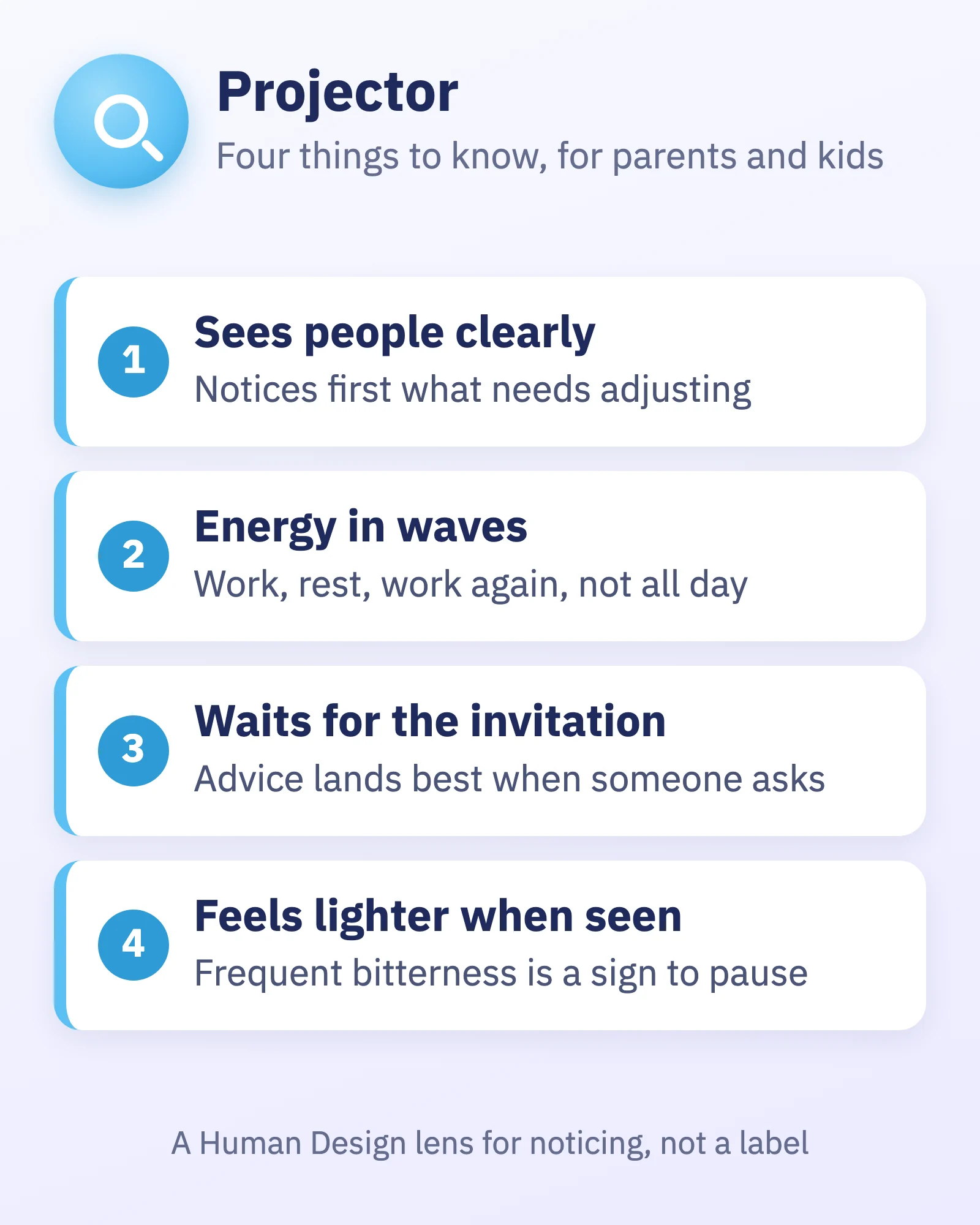
- They see people and systems clearly. They often notice before anyone else what needs adjusting, or who is quietly pushing too hard.
- Their energy comes in waves. It isn't built for hard, nonstop work all day. Work, then rest, then work again.
- Their advice lands best when someone asks. That's why the system suggests Projectors "wait for the invitation," especially for big things.
- They feel lighter when they feel seen. And if bitterness keeps showing up, it's treated as a signal to stop and look at what they're forcing.
Type isn't something you read from personality, by the way. It comes from the actual chart: a Projector's Sacral center (the life-force center) is white, and none of the motor centers (Root, Solar Plexus, Heart) connects to the Throat. That last part is what sets a Projector apart from a Manifestor. If you want to see where to look, read How to read a Human Design chart.
If your child is a Projector, try noticing these four things
If something doesn't fit your kid, skip it. You live with your child every day, and you know them better than any chart does.
1. Resting often doesn't mean lazy
Many Projector kids play with real enthusiasm, then run out sooner than their friends, especially after a day full of people. Try giving them 20 to 30 quiet minutes after they get home. No questions, no chat. Then start on the shower and homework. Try it for a week and see whether your evenings change.

2. Ask what they think, instead of telling them everything
Projector kids often notice what grown-ups miss. Try "How do you think we should do this?" with small things, like sorting their room, putting toys away or planning the weekend, and listen all the way through. A lot of families find their child had good ideas all along. Nobody had asked.
3. Praise what you actually saw
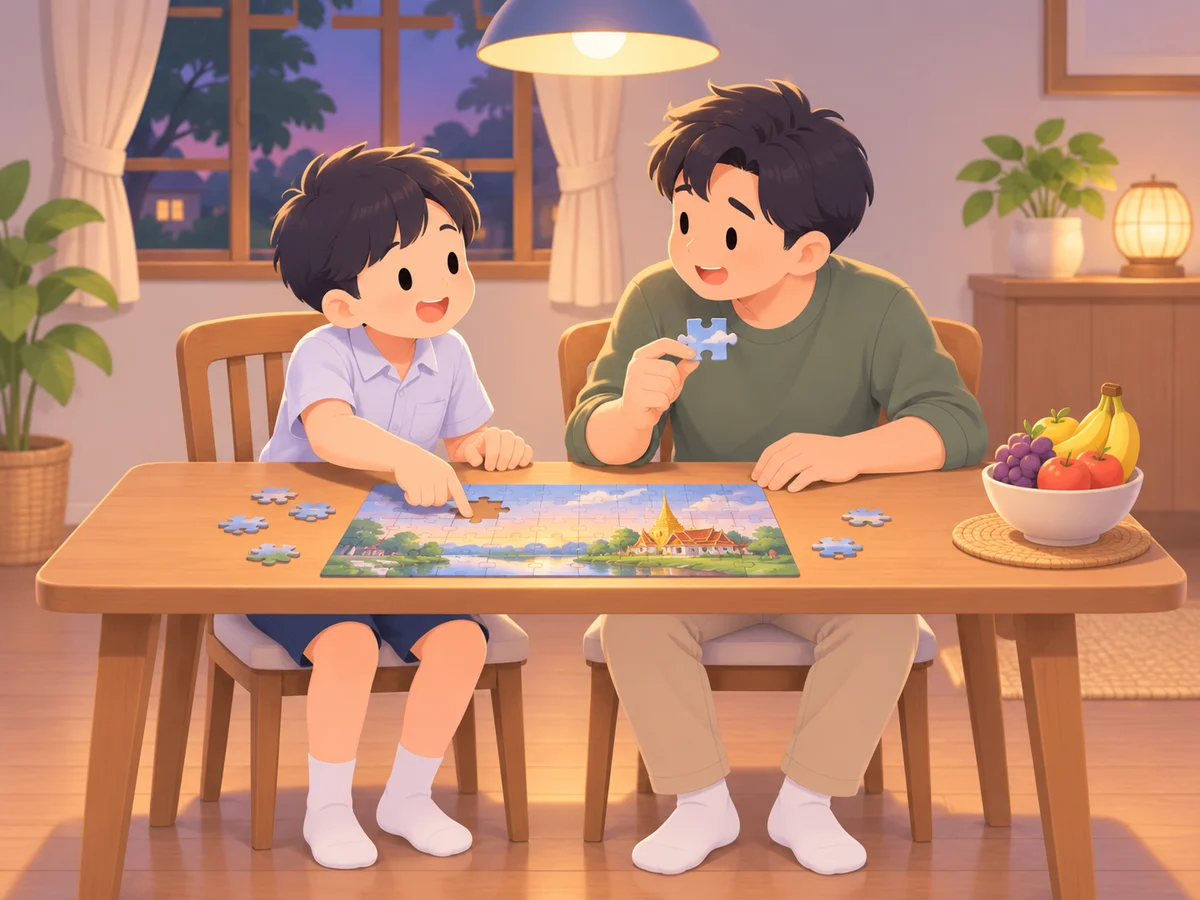
Instead of "great job," try saying exactly what you noticed: "I saw that. You knew your sister was sad, and you went and sat next to her." Kids who are always watching other people often feel especially good when they realize someone was watching them, too.
4. Crowds can be more tiring than they look
Parties, packed malls, or days with activities back to back can drain a lot of energy. Try leaving a little earlier, or finding a quiet corner for a break in the middle of the day.
If you're the Projector parent
Every parent is tired. But if you're a Projector, the tiredness may come sooner than you expect, and sometimes we blame ourselves for not doing enough.
Here are three things to try:
- Ask before you advise. When your child or partner tells you something, try asking, "Do you want help thinking it through, or do you just want me to listen?" If they want help, your advice will land much better.
- Rest before you run out, not after. A short nap, ten quiet minutes, or asking someone else to take over for a while is fine. A parent who gets to rest can still be a good parent.
- Notice the bitterness. If you often catch yourself thinking "I do all this and nobody notices," try talking it over with someone you trust. Saying it out loud often shows you what you've been forcing.
"Waiting for the invitation" doesn't mean sitting still
This one gets misunderstood a lot. Your child still does homework, and a Projector parent can still speak up as usual. The system mainly talks about big things, like relationships, work or a new role, going better when someone values you and invites you in.
At home, you can make this easy by being the one who invites. "Want to help me figure out what to pack for this trip?" sounds only slightly different from "Go pack your bag." For some kids, though, it makes a big difference.
Using the Projector idea in a way that feels safe
Human Design is an energy system with no scientific research confirming it. I see it as a lens to help you notice things, not a label that says who your child is. Your child doesn't have to match their chart, and they don't have to match what we expect of them either.
If you don't yet know everyone's type at home, don't guess from personality. Family Blueprint calculates a chart for everyone in the family and turns it into an energy guide you can read chapter by chapter. You can see what it looks like on the Human Design chart page.
Curious what your child is like?
Family Blueprint calculates an energy chart for everyone at home and writes it up as an easy-to-read guide for noticing and talking together.
Start freeSee plans and pricesIf you're worried, it's always fine to ask a professional
If your child gets tired unusually easily, sleeps a lot and still feels drained, or their mood changes enough to worry you, please don't put it down to their chart type. Talk with a pediatrician or a child psychologist first. A chart can't replace a checkup.
This article is a perspective for reflection and learning. It is not a diagnosis and does not promise any result.
Questions parents often ask
How common are Projectors?
Human Design says about one in five people are Projectors, so there's a fair chance there's at least one in your family.
If my child is a Projector, should I let them rest all the time?
Not quite. Your child still has their own jobs, like every kid. Just try building rest breaks into the rhythm, and see whether the things they need to do get easier.
I'm a Projector and my child is a different type. Can we still get along?
No pairing is better or worse, just different rhythms. Knowing where you differ helps you stop measuring your child by your own pace.
Try your family's energy guide
Add the birth date, time and place of the people at home, then read the ideas that fit each of them. Try one at a time and keep only what works for your family.
Start freeSee plans and pricesHave a question about this?
Ask other parents and the Family Blueprint team in our community. Read what other homes asked first, no sign-up needed.
Ask in the communityRelated situations, with words you can use
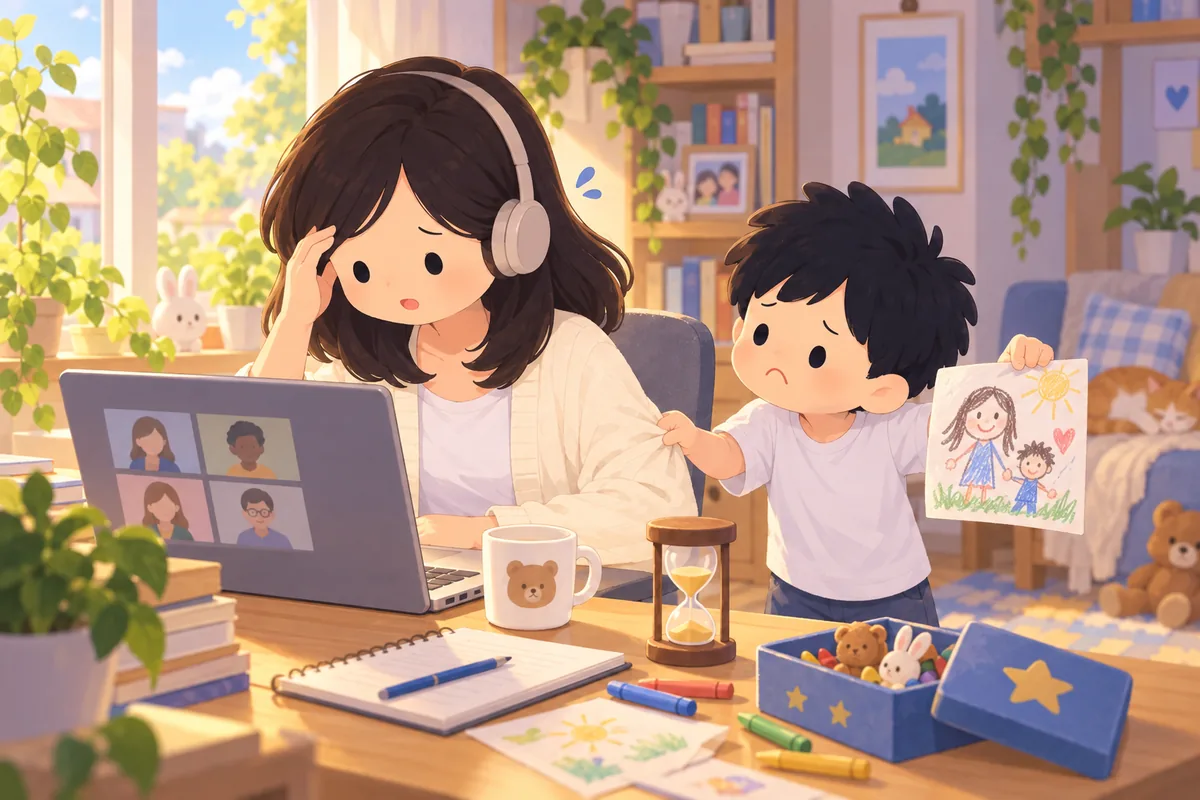 Wants attention while you work: what helpsWants attention while you work? Your child may miss Mum or Dad, who is close by yet somehow not there. For children, even attention from being told off…
 Refusing homework: what helpsRefusing homework? Your child may feel the work is too big to start, or be afraid of getting it wrong. Getting up again and again can be a way to escape…
 Comparing your child with others: what helpsComparing your child with others? Your child may feel they're not good enough in Mum or Dad's eyes, and may start to believe they're loved only when the…
Keep reading
 Manifesting Generator in Human Design: for parents and kidsWhat is a Manifesting Generator in Human Design? Why some people juggle many things, move fast and skip steps, and how to make that energy easier at home.
 Family problems and solutions you can start at homeCommon family problems, from the same old fights to talking less and running on empty, and five small solutions you can start at home today, one step at a time.
 How to find yourself when you don't know what you likeHow to find yourself when you feel lost and don't know what you like: five small ways to start noticing yourself again, for working adults, parents and teens.